Security & belonging
A proposed mix of homes, accessible public spaces, community services and practical support, designed to help people build stable lives.
A community where all of life’s needs are provided for, so people have the freedom to rest, learn, create and grow. That is the OMNIA Living City vision. A first campus is the starting point, not the limit.
Explore the masterplan ↓Imagine knowing that your home, food, utilities, care, transport and learning are taken care of together. You would not have to find and arrange every essential service on your own. The intended community model is to provide and coordinate that support.
This grows from OMNIA’s Living City and Soul Utopia plans. Soul Utopia is the purpose: a fuller life with dignity and choice. The City is the place. LiteWork is a proposed way to take part and contribute. Affordable homes matter, but the vision is much bigger than housing.
Explore six imagined districts linked by green corridors, walkable streets and shared public life. Select a numbered marker.
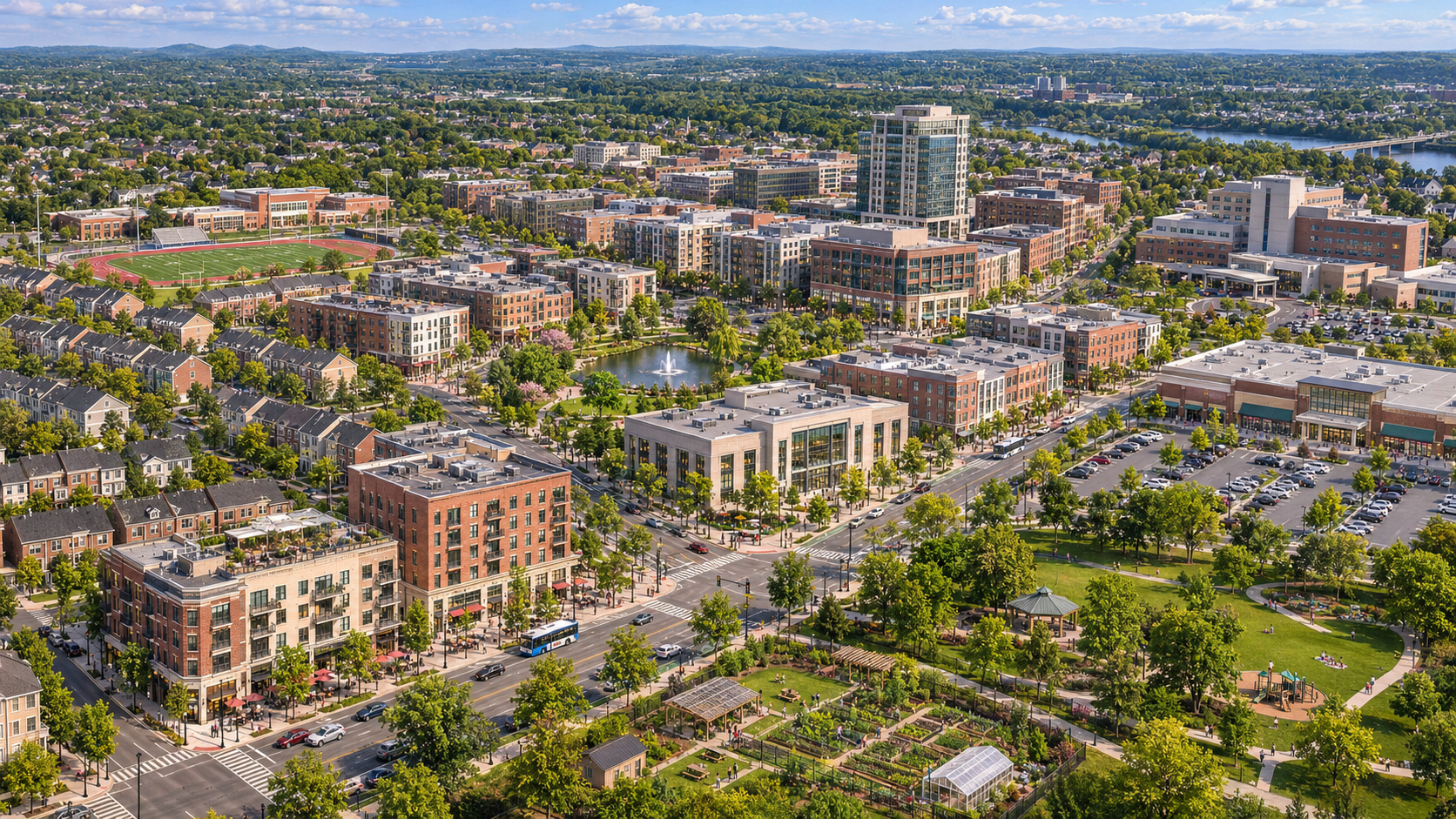
Homes for different stages of life, arranged around shaded courtyards, neighborhood services and places to gather. Privacy at home. Connection just outside the door.
Illustrative district locations, not a surveyed or engineered plan. All images are conceptual visualizations; land, transport links and amenities are not secured or approved.
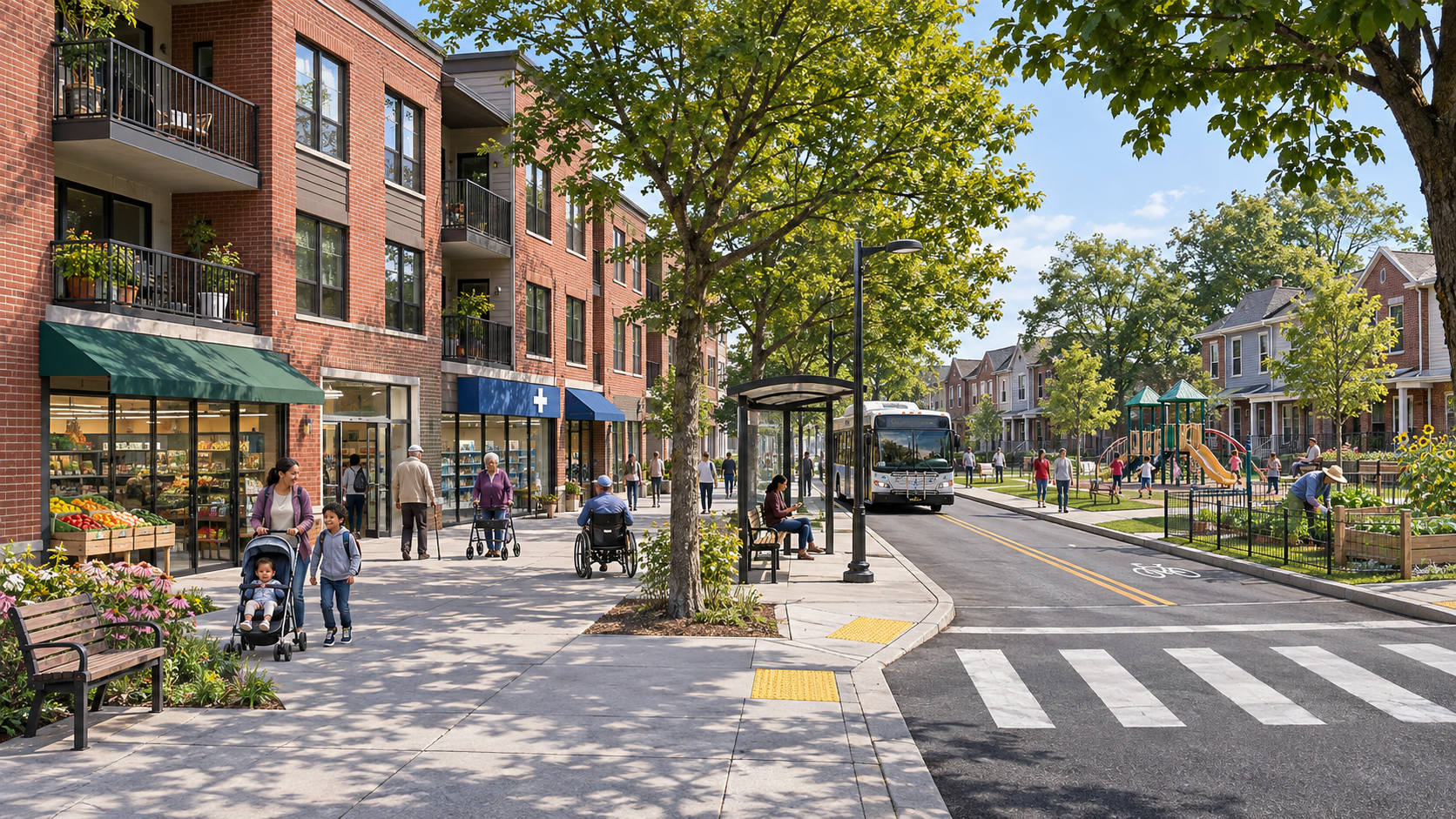
The real measure of a city is how it feels to live in it.
Neighborhood food, learning, care and services planned together, rather than hours apart.
Welcoming common spaces balanced with quiet homes, private retreats and freedom of choice.
Greenways, water, shade and thoughtful public places as daily experiences, not occasional luxuries.
A flourishing place needs more than beautiful buildings. The concept connects the systems that support everyday life.
A proposed mix of homes, accessible public spaces, community services and practical support, designed to help people build stable lives.
Studios, workshops, local enterprises and research spaces turn ideas into useful work. OMNIA’s creative and business ecosystem becomes part of the neighborhood.
Water-sensitive landscapes, energy planning, shared mobility and clear governance would be developed together, with measurable outcomes and resident choice.
The aim is a community that provides for the whole person. Essentials would be part of one planned, funded support system, not a list of services residents must solve for themselves.
Safe housing, food, water, power, internet, sanitation, waste collection and help with everyday household tasks.
Healthcare and wellness support, childcare, accessible spaces and help getting the right care. Qualified people and service providers would deliver care.
Education, skills, job training, business support and ways to contribute. Online learning, nearby schools and a possible future on-campus school would be explored.
Transport, safe streets, parks, recreation, shared meals, creativity and places to make friends. Space for rest and privacy matters too.
People and permission-controlled digital tools would coordinate household and business support. A connected online world could help people learn, create and request real services.
Resident input, clear rights, accessible complaints, independent oversight and emergency plans. The operating budget must cover support over time, not just build attractive buildings.
This is the intended community model, not a service package available today. What is provided, by whom, for how long and on what terms must be clearly defined and funded before anyone is asked to rely on it. No site, complete funding package or operating service network is secured for this campus.
The campus vision welcomes everyone: individuals, adults and families across backgrounds and stages of life. It combines dorm-style accommodation, apartments and homes. These are proposed choices, not available listings. Household privacy, accessibility, safeguarding and appropriate facilities would guide the design.
Dorm-style rooms for adults, plus studios and one-bedroom apartments. Shared facilities would be planned around safety, dignity, privacy and individual needs.
Family apartments and modest townhouses with nearby childcare, schools, playgrounds and laundry.
Step-free layouts, accessible bathrooms and elevators where needed, with care and daily services close by.
Explore modest homes, cooperative ownership or community land-trust partnerships where feasible, alongside long-term rentals.
Modest floor plans, durable materials and phased construction rather than luxury-only features. Test full housing costs, including utilities and fees, against local household incomes.
Explore income-restricted homes, housing subsidies and mission-aligned housing partners. Any eligibility rules and affordability commitments would need funding and enforceable agreements.
Efficient buildings, nearby groceries and jobs, shared public amenities, walking routes and practical bus connections can reduce recurring expenses.
No resident charges, rents, purchase prices, income limits or subsidies are set or guaranteed. The full support model must be costed and funded before any promise about what residents would pay or receive.
Food access through groceries, fresh-food markets and potential community food programs; a proposed health clinic and pharmacy partnerships; childcare, laundry and everyday household services. Clinical and childcare services would require qualified operators, licensing, funding and appropriate facilities.
Education pathways could include online learning, partnerships with nearby schools and, eventually, an on-campus school if feasible and approved. Proposed job training, a library, after-school activities, workshops and local businesses would support learning and work. Providers and school arrangements are not yet secured.
Drinking water, wastewater treatment, stormwater systems, electricity, broadband and waste collection.
Fire and emergency response planning, street lighting, safe crossings, accessible sidewalks, bus stops, bike routes, parks and accountable community governance.
These necessities are planning requirements, not operating services. Capacity, funding and delivery require professional feasibility and approvals.
Morning light on the greenway. A walk, a quiet coffee, a neighborhood beginning to wake.
A studio session, a small-business workshop or time at the discovery campus.
Learning, play, care and everyday errands woven into one accessible neighborhood.
A shared meal, a waterfront performance, then the comfort of your own space.
The proposed model would bring money into the community to cover basic needs. No single source should be assumed to pay for everything.
Seek eligible grants, sponsorships and in-kind support for planning, facilities and services. None is counted as available until confirmed, and each source must be used for its allowed purpose.
Campus businesses and OMNIA services could sell useful products and services to customers outside the community. Only income left after business costs could help fund shared needs. Sales and profits are not guaranteed.
Residents could choose to work, learn, create or take part in other ways. This vision does not make work a condition for basic support. A reserve and backup plan would be needed if income falls or funding ends.
This is a proposed funding approach, not an established financial system. Before opening, the plan must show real costs, reliable funding, responsible operators and what happens during a shortfall. Limited investment may be considered separately; no investment terms or returns are offered here.
OMNIA City is at the concept stage. The proposed first residential step is an inclusive campus welcoming everyone, with dorms, apartments and homes for adults and families. Its purpose is to begin delivering the wider whole-life-support vision, including food, childcare, healthcare, learning, transport and daily support. It is not only an affordable-housing project. These are planning goals, not services currently available. Georgia is preferred if the location, funding, infrastructure and operating support make the project viable.
Help assess a first-campus location, community needs, housing costs, utilities, transport and a realistic construction and operating budget. Start with a funded feasibility and design phase, then decide whether a supported campus can safely open. A larger city remains the long-term vision, not the first construction commitment.
Introduce a donated site, an existing housing development, or a municipal or development partner. School, hospital and other institutional-property partnerships could also be explored, subject to suitability, permissions, safety and conversion costs. No site or partner is secured.
The preferred approach is grants, sponsorships and in-kind partnerships, with limited investment considered only where appropriate. Eligibility, funding awards and partner commitments are not established. Before accepting funds, the recipient, use, terms and reporting arrangements must be clear.
Use the published OMNIA contact channel and identify your inquiry as “OMNIA City support.” No donation checkout is connected to this page yet. This is not an investment offer; no return, tax deduction or construction timeline is promised.
OMNIA City is a modern-day vision of a community where needs are provided for and people have room to live fully. The campus is a first step toward that larger vision. Turning it into a real place would require land selection, community engagement, feasibility studies, financing, professional design and approvals.
Return to the masterplan ↑